If you have been told you need dental implants, you may have questions that go beyond cost and treatment time. Where will the implants be placed? Is there enough bone to support them? What happens if you have been wearing dentures for years? And how does your dentist know where an implant should go before treatment even begins?
These are important questions because every patient’s mouth is different.
Modern dental implant treatment uses advanced imaging and digital planning to give the dental team a detailed view of the jaw before surgery. Instead of relying only on a traditional two-dimensional X-ray, dentists can use three-dimensional images to examine the available bone, surrounding anatomy and proposed implant positions.
For patients considering full-arch treatment, All on four dental implants or more complex options such as zygomatic implants, this detailed planning can be particularly important.
At G4 Dental Implants in Tysons Corner, the clinical team uses advanced diagnostic imaging and digital planning as part of its implant-focused approach. The Tysons team includes Dr. Fadi Alharashi, DDS, and Dr. Shima Mohseni, DDS, who work with patients to develop treatment plans based on their individual clinical needs.
Why Dental Implant Candidates Should Care About Digital Planning
Dental implant planning may sound like something that happens behind the scenes, but it can have a direct impact on your treatment experience.
Imagine arriving for an implant consultation and being told that your dentist needs to understand the exact shape and condition of your jaw before recommending treatment. That is where three-dimensional imaging becomes useful.
A CBCT scan, or cone beam computed tomography scan, produces a three-dimensional image of the jaw. It allows the dental team to examine areas that may not be fully visible on a conventional X-ray.
This can help answer questions such as:
- How much bone is available?
- Where are important nerves and other anatomical structures?
- Are the sinuses close to the proposed implant area?
- Where could an implant potentially be positioned?
- Is additional treatment likely to be necessary?
- Which implant approach may be appropriate for the patient’s situation?
Digital planning does not guarantee a particular result. However, it gives the clinical team more detailed information to consider before treatment begins.
What Happens During a Digital Implant Consultation?
For many patients, the biggest source of anxiety is simply not knowing what will happen at the first appointment.
At G4 Dental Implants, the consultation process involves gathering diagnostic information and discussing the patient’s treatment goals. The practice states that patients may undergo CT scans, facial scans, X-rays and measurements as part of the planning process, along with discussions with the doctors about their treatment.
This is more than simply taking pictures of your teeth.
The goal is to understand your current oral condition and determine which treatment options may be appropriate for you. Your dentist can review your anatomy, discuss your concerns and explain how the proposed treatment would address missing, failing or severely compromised teeth.
For someone who has struggled with dentures, loose teeth or years of dental problems, having the opportunity to sit down with an implant-focused team and discuss these concerns can be an important first step.
Meet the G4 Dental Implants Tysons Clinical Team
Choosing an implant provider is about more than technology. Patients also want to know who will be involved in their care.
At the Tysons Corner location, dental implant treatment is provided by an implant-focused clinical team that includes Dr. Fadi Alharashi, DDS, and Dr. Shima Mohseni, DDS. The practice describes the team as working collaboratively to provide implant care tailored to each patient’s clinical needs.
The Tysons location is dedicated specifically to advanced dental implant treatment rather than general dentistry. Its services include full-arch dental implant solutions, implant-supported fixed restorations and advanced implant planning and surgical placement.
That focus can be especially relevant for patients who are not looking for a routine dental cleaning or filling, but are exploring a more involved solution for missing or failing teeth.
When you meet with the G4 team, you can discuss your concerns, review your diagnostic information and ask questions about the treatment options available for your situation.
How 3D Planning Helps With Implant Positioning
One of the most important aspects of implant treatment is determining where the implants should be placed.
An implant is not simply positioned wherever there happens to be an empty space. Its location needs to be considered in relation to the available bone, neighbouring structures, the eventual restoration and the patient’s overall anatomy.
Three-dimensional planning allows the dental team to examine the proposed implant position from different views before surgery.
This can help the dentist identify anatomical limitations and plan the procedure with a clearer understanding of the patient’s jaw.
For patients, this can make the consultation more informative because the treatment plan can be discussed using detailed images rather than relying only on a general explanation.
What If You Have Been Told You Don’t Have Enough Bone?
This is one of the questions many implant candidates worry about.
Bone loss can occur after teeth have been missing for an extended period. Some patients may have already been told that they are not suitable candidates for traditional dental implants.
However, being told that you do not have enough bone for one type of implant treatment does not necessarily mean that every implant option is unsuitable.
G4 Dental Implants explains that its doctors evaluate patients individually and that its approach may use areas of the jaw with denser bone when appropriate. The practice also describes situations where patients who have previously been told they were not candidates for traditional implants may be evaluated for the G4 Implant Solution.
That does not mean every patient will qualify.
Your bone structure, oral health, medical circumstances and treatment goals all need to be evaluated before a recommendation can be made.
If you have previously been told that you need extensive bone grafting or that implants are not possible, a consultation can help you understand whether other approaches should be considered.
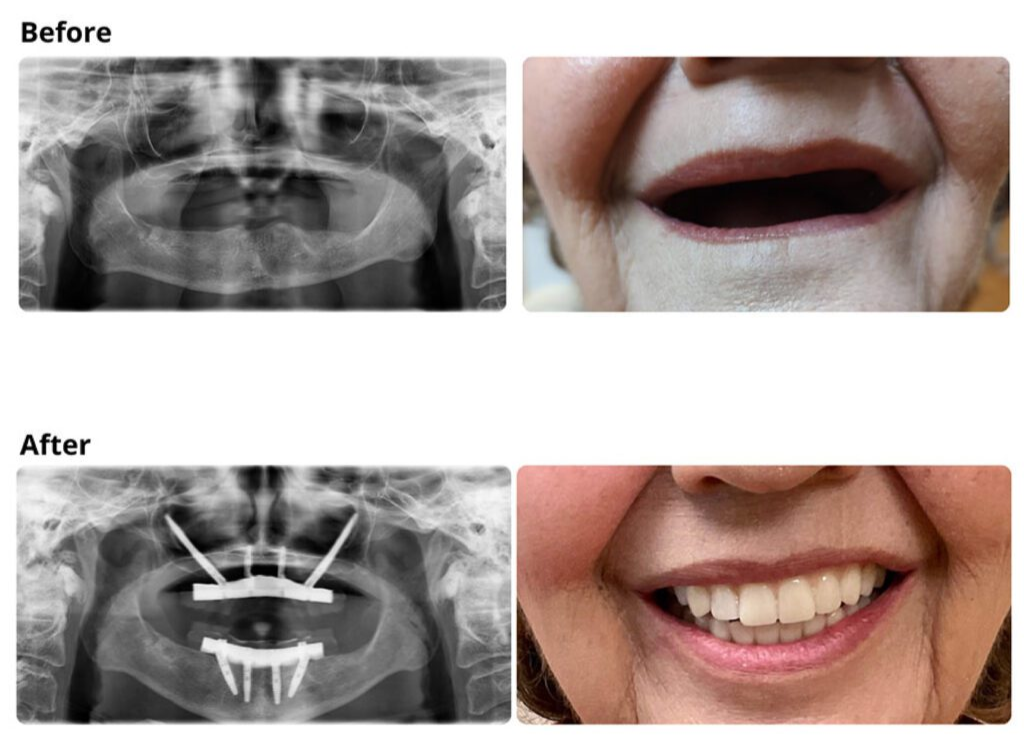
How Digital Planning Supports All on four Dental Implants
Patients with several missing or failing teeth may be interested in full-arch treatment rather than replacing individual teeth one at a time.
All on four dental implants use strategically positioned implants to support a full arch of replacement teeth. Because multiple implants and a full restoration are involved, careful planning becomes particularly important.
Digital imaging can help the clinical team evaluate the jaw and determine where implants may be positioned based on the patient’s anatomy.
At G4 Dental Implants, the G4 Implant Solution combines All on Four technology with the practice’s own treatment protocols. The practice also has an on-site laboratory and uses digital technology, including CT scans, 3D facial scanners, intraoral cameras and treatment-planning software.
For patients considering full-arch treatment, this integrated approach means the diagnostic, surgical and restorative aspects of treatment can be coordinated within the same practice.
What About Patients Who Have Worn Dentures for Years?
Living with dentures can be frustrating, particularly when they become loose, uncomfortable or difficult to eat with.
Some denture wearers eventually begin researching implant-supported options because they want a more stable alternative.
If you currently wear dentures, you may still be able to explore dental implant treatment. However, candidacy cannot be determined simply by how long you have worn dentures.
A proper assessment is needed to evaluate your jawbone, oral health and overall circumstances.
At a consultation, you can discuss what you dislike about your current dentures and what you would like to change. These conversations can help your dental team understand whether implant-supported treatment may be appropriate for you.
Can 3D Planning Help With Zygomatic Implants?
Some patients experience substantial bone loss in the upper jaw, making conventional implant placement more challenging.
In selected cases, zygomatic dental implants may be considered. These specialised implants use the cheekbone for support rather than relying entirely on the available upper jawbone.
Because the anatomy involved is complex, detailed imaging and careful treatment planning are particularly important.
G4 Dental Implants offers Zygomatic Dental Implant treatment for selected patients with significant upper-jaw bone loss. The practice describes detailed planning and specialised expertise as part of its approach to these cases.
If another dentist has told you that severe bone loss makes conventional implants difficult, this may be a topic worth discussing during an implant consultation.
What Makes a Dental Implant Consultation Worthwhile?
If you have been living with missing teeth, failing teeth or dentures, you may already have spent considerable time researching treatment online.
But online information can only take you so far.
Your jawbone is unique. Your dental history is unique. Your goals are unique.
A consultation gives you the opportunity to move from general information to a discussion about your own circumstances.
At G4 Dental Implants in Tysons Corner, the center is dedicated specifically to implant treatment and serves patients from Northern Virginia, Washington, DC and surrounding areas. The practice uses diagnostic imaging and digital planning to develop treatment plans based on individual anatomy and treatment needs.
You can ask questions such as:
- Am I a candidate for dental implants?
- Do I have enough bone for the treatment I am considering?
- Could full-arch treatment be appropriate for me?
- What happens if I have worn dentures for many years?
- Would All on four or another implant approach be suitable?
- What will my treatment timeline look like?
- What type of restoration will I receive?
- Who will be involved in my treatment?
These are the questions that can turn a general internet search into a meaningful conversation about your own smile.