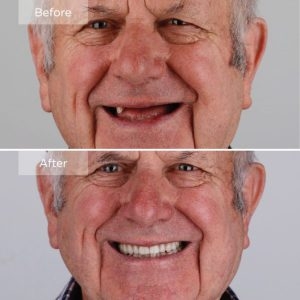

If you are considering dental implants, one of the biggest questions may not be about the procedure itself. It may be, “What will I feel like afterward?”
Will you be able to eat normally? How long will your mouth feel sore? When can you return to work? When will your new teeth feel like part of your everyday life?
These are understandable questions. Dental implant treatment is a process rather than a single appointment, and recovery can look different depending on how many implants you receive, your oral health, the condition of your jawbone and the type of restoration being planned.
At G4 Dental Implants, the Tysons Corner team focuses specifically on implant treatment, including advanced and full-arch care. The practice’s implant team includes Dr. Fadi Alhrashi, DDS, and Dr. Shima Mohseni, DDS, who provide care at the Tysons, Virginia location. Dr. Alhrashi has extensive advanced implant training, including postgraduate studies, an Advanced General Dentistry residency and a dental implant fellowship, while Dr. Mohseni has pursued additional education in dental implants, oral surgery and esthetic dentistry.
Knowing what recovery may involve can make the process feel much less uncertain. Here is what you can generally expect from the first week through the later stages of healing.
What Actually Happens After Dental Implant Surgery?
Before looking at the timeline, it helps to understand why recovery takes time.
A dental implant is placed into the jawbone to act as an artificial tooth root. Following placement, the surrounding tissues need to heal. More importantly, the bone gradually integrates with the implant through a process called osseointegration.
This is one reason you may feel considerably better before your implant is completely healed.
In other words, being comfortable does not necessarily mean the implant is ready for its final restoration.
Your recovery can also depend on whether you are receiving one implant to replace a missing tooth or undergoing a more extensive treatment involving multiple implants or a full arch.
At G4’s Tysons Corner location, the team provides full-arch dental implant solutions and implant-supported fixed restorations, with treatment planning based on each patient’s anatomy, needs and oral health.
The First Few Days: What Will Recovery Feel Like?
The first few days are usually when patients notice the most changes.
You may experience:
- Swelling around the treatment area
- Tenderness or mild discomfort
- Minor bruising
- Gum sensitivity
- Temporary changes in what and how you can eat
- A feeling of pressure or awareness around the surgical site
These symptoms can vary considerably from one patient to another. Your dentist will give you specific postoperative instructions based on the procedure you received.
Rather than judging your recovery by how another person felt, pay attention to the instructions provided by your own dental team.
What Can You Eat?
Soft foods are generally easier to manage immediately after implant surgery. Depending on your treatment, your dental team may recommend foods that require little chewing while the surgical area begins to heal.
As healing progresses, you can usually introduce more foods according to your dentist’s instructions.
One important point is that feeling hungry and wanting to return to your normal diet does not mean the implant is ready for unrestricted chewing. The implant still needs time to integrate with the surrounding bone.
Week 1: Protecting the Healing Area
The first week is primarily about allowing the surgical site to settle.
Swelling and discomfort are often most noticeable during the early days and should generally begin improving rather than progressively worsening.
You may need to adjust your normal routine temporarily. Your dental team may provide instructions regarding brushing, rinsing, food choices, exercise and other activities.
It can be tempting to check the area repeatedly or worry about every sensation. However, some tenderness or sensitivity does not necessarily mean something has gone wrong.
The more useful question is whether your symptoms are following the recovery pattern your dental team described.
What Should You Be Able to Do by the End of Week 1?
Many patients are beginning to feel more comfortable by the end of the first week. However, recovery is individual.
You may still have some sensitivity, particularly around the treatment area. If you are unsure whether what you are experiencing is normal, contacting your dental team is better than trying to diagnose the problem yourself.
At G4, the treatment process is designed around implant-focused care, with the Tysons Corner center supporting patients from diagnosis and planning through surgical and restorative stages.
Week 2: You May Feel Much Better, But Healing Is Not Finished
The second week can feel very different from the first.
For many patients, the obvious signs of surgery have reduced. Swelling should generally be settling, everyday activities may feel easier and eating may gradually become less challenging.
This can create a common misconception: “I feel fine, so my implant must be completely healed.”
Not necessarily.
The gums may be recovering well on the surface while the deeper bone-healing process continues.
This is why follow-up appointments matter even when you feel perfectly comfortable.
Your dental team can assess healing and determine whether everything is progressing as expected.
Weeks 3 to 6: The Quiet Part of Recovery
Weeks three through six can be less dramatic.
You may not notice much happening from day to day, but the biological healing process continues beneath the surface.
During this period, osseointegration is particularly important. The jawbone gradually bonds with the implant, helping create the stability needed for the eventual restoration.
For patients, this can be the frustrating part of recovery because there may be no obvious sign that the implant is becoming more secure.
Think of it as the foundation stage of treatment. You may not see the work taking place, but it is an important part of the overall process.
Your dentist may schedule follow-up visits to monitor healing and determine when you are ready for the next stage.
Beyond Six Weeks: When Will My Implant Be Fully Healed?
There is no universal date when every dental implant is considered completely healed.
Some patients may progress relatively quickly, while others require more time. Factors that can influence the timeline include:
- The number and location of implants
- Bone quality and quantity
- Overall oral health
- Gum health
- Whether bone grafting was required
- The complexity of the procedure
- The type of restoration being planned
Complete integration can take several months.
This is especially important to understand if you are comparing your recovery with someone else’s experience. A friend may have returned to normal activities quickly, while your dentist may recommend a different schedule. Neither situation automatically means something is wrong.
Your treatment plan should be based on your individual healing rather than someone else’s timeline.
What About Recovery With Full-Arch Dental Implants?
If you are considering full-arch treatment, your recovery experience may be different from someone receiving a single implant.
Treatments such as All on four dental implants involve multiple implants supporting a larger restoration. This means your dentist needs to consider the overall condition of your mouth, bone structure and the planned restoration rather than focusing on one missing tooth.
G4’s Tysons Corner center specifically provides full-arch implant solutions and implant-supported fixed restorations.
For someone who has struggled with loose or uncomfortable dentures, this can also raise a more personal question: “What will everyday life feel like afterward?”
That is something worth discussing during a consultation. Your provider can explain what type of restoration may be appropriate, how the treatment will be staged and what you can realistically expect during recovery.
What If You Have Been Told You Don’t Have Enough Bone?
Bone loss is another concern many prospective implant patients have.
If you have been told in the past that you are not a candidate for conventional implants because of limited bone, it does not necessarily answer every possible treatment question.
For example, G4 provides information about Zygomatic Dental Implant Experts and treatment options designed for certain patients with limited upper-jaw bone.
However, this type of treatment is not appropriate for everyone. A detailed evaluation is needed to determine whether it is suitable for your individual situation.
That is one reason a consultation can be more useful than trying to determine your candidacy from an online article.
Meet the G4 Dental Implant Team in Tysons
Choosing an implant provider is about more than finding a location close to home.
You are trusting a dental team with your smile, oral function and a treatment process that may extend over several stages.
At G4’s Tysons Corner center, Dr. Fadi Alhrashi, DDS, brings extensive implant-focused education and experience to patient care. His training includes an Advanced General Dentistry residency at the Eastman Institute for Oral Health and a Dental Implant Fellowship at Tufts School of Dental Medicine. G4 also identifies him as board certified and a Diplomate of the American Board of Oral Implantology.
Dr. Shima Mohseni, DDS, is also part of the DC/Virginia G4 team. Her additional education includes courses in esthetic dentistry, dental implants and oral surgery. G4 describes her approach as patient-centered, with an emphasis on connecting with patients and helping them make informed decisions about their oral health.
The Tysons location is an implant-focused center equipped for advanced diagnostic imaging, digital planning, surgical treatment and coordinated restorative care.
For a patient who is nervous about implant treatment, knowing who will be involved in the process can make the first conversation feel much more personal.
Questions to Ask at Your Dental Implant Consultation
If you are researching implants, consider bringing a list of questions to your consultation.
You might ask:
“How long do you expect my recovery to take?”
Your provider can explain the expected timeline based on your specific treatment rather than giving you a generic estimate.
“Will I be able to eat normally while I heal?”
Your provider can explain what foods may be appropriate at different stages and when you can expect dietary restrictions to change.
“Do I need one implant or multiple implants?”
The answer depends on the number of missing or failing teeth, your bone structure and the restoration being planned.
“What happens if I have bone loss?”
Ask whether additional procedures or alternative implant approaches should be considered.
“Who will perform my treatment?”
Understanding your provider’s education, implant experience and role in your treatment can help you feel more comfortable with your decision.
“What happens after the implants are placed?”
Ask about temporary teeth, follow-up visits, final restorations and long-term maintenance.
These questions can turn a general consultation into a conversation about your individual needs.
When Should You Contact Your Dental Team?
Some discomfort is expected following implant surgery, but you should not ignore symptoms that concern you.
Contact your dental team if you experience severe or worsening pain, significant bleeding, increasing swelling, fever or other unexpected changes.
It is also reasonable to contact your provider if you simply are not sure whether something you are experiencing is part of normal recovery.
You do not have to figure it out alone.
Is Dental Implant Recovery Worth Planning For?
If you are considering dental implants, recovery is an important part of the decision.
The procedure itself may be the part you think about most, but successful treatment also involves healing, follow-up care and allowing the implant time to integrate with your jawbone.
At G4 Dental Implants in Tysons Corner, the team works with patients through implant-focused diagnosis, treatment planning, surgery and restoration. If you are considering implants and want to understand whether the treatment is appropriate for your situation, you can contact G4 Dental Implants to discuss your options with the team.
A consultation can give you something an online recovery timeline cannot: a treatment plan based on your teeth, your bone structure, your goals and your expected recovery.