
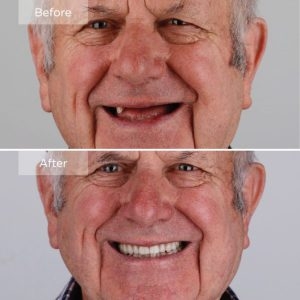
If you have been living with missing teeth or uncomfortable dentures for years, you may have wondered whether dental implants are still an option for you.
Perhaps you are in your 60s, 70s or 80s and think you have simply waited too long. Or maybe another dentist has told you that bone loss could make implants difficult. You may also be wondering whether your medications or other health conditions could affect treatment.
The good news is that age alone does not determine whether someone can receive dental implants. What matters is the bigger picture: your oral health, jawbone condition, general health, treatment goals and ability to maintain your new teeth.
At G4 Dental Implants, implant treatment is the primary focus of the practice. The Tysons Corner location has an implant-focused clinical team that includes Dr. Fadi Alhrashi, DDS, and Dr. Shima Mohseni, DDS. Rather than asking whether you are simply “too old,” the goal of an implant consultation is to understand your individual situation and determine which options may be appropriate.
So, if you have been thinking, “Could dental implants still work for me?” here are the questions worth asking.
Is There Really an Age Limit for Dental Implants?
There is no universal age at which dental implants automatically become unsuitable.
A healthy 75-year-old may have conditions that are suitable for implant treatment, while a younger person could have gum disease, significant bone loss or another issue that requires attention before implants can be considered.
That is why age is only one part of the conversation.
Your dentist will typically want to understand:
- How many teeth are missing
- How long the teeth have been missing
- The condition of your gums
- The amount and quality of available jawbone
- Whether you currently wear dentures
- Your medical history and medications
- Your ability to maintain good oral hygiene
- What you want to accomplish with treatment
For someone considering dental implants in Tysons, this personalised evaluation can be much more useful than trying to determine candidacy based on age alone.
Why Are More Older Adults Considering Dental Implants?
For many people, the question is not simply about having a nicer-looking smile.
It is about being able to eat comfortably, speak without worrying about loose dentures and feel more confident in everyday situations.
Missing teeth can change the way you eat. Some people begin avoiding foods that are difficult to chew. Others become increasingly conscious of speaking, smiling or eating around friends and family.
Dentures can replace missing teeth, but they are removable and can require adjustments as the mouth changes over time. Some patients eventually start looking for a more stable tooth-replacement option.
That is where dental implants may enter the conversation.
Unlike conventional dentures, implants are placed into the jawbone and can provide a foundation for replacement teeth. The specific restoration and treatment approach depend on the patient’s circumstances.
What If I’ve Been Wearing Dentures for Years?
This is one of the most common concerns among people who have lived with missing teeth for a long time.
Wearing dentures does not automatically mean you cannot consider implants.
However, the longer teeth have been missing, the more important it may be to evaluate the condition of the jawbone. Tooth loss can be associated with changes in the bone over time, which may influence conventional implant placement.
If you have worn dentures for many years, do not assume that your only option is to continue with removable teeth. An implant evaluation can help determine what options may be available based on your current anatomy.
For patients who have lost most or all of their teeth, full-arch solutions such as All-on-4 dental implants may be discussed when clinically appropriate.
What If Another Dentist Told Me I Don’t Have Enough Bone?
Being told that you have bone loss can be discouraging, especially if you have already spent years dealing with missing teeth.
But “not enough bone” does not necessarily mean that the conversation ends there.
The appropriate treatment depends on where the bone has been lost, how much remains and what type of implant restoration is being considered. Additional procedures may sometimes be considered to improve the foundation for conventional implants.
In cases involving significant bone loss in the upper jaw, specialised options may also be evaluated.
For example, zygomatic dental implants use the cheekbone region for support and may be considered for selected patients with severe upper-jaw bone loss. G4 Dental Implants specifically provides zygomatic implant treatment for appropriate cases.
This does not mean zygomatic implants are suitable for everyone. It means that patients who have previously been told they have insufficient bone may benefit from getting a detailed evaluation rather than assuming there are no alternatives.
Can Medical Conditions Affect Dental Implant Treatment?
This is where the conversation needs to move beyond age.
As people get older, they may be more likely to manage conditions such as diabetes, osteoporosis, cardiovascular disease or other chronic health concerns. They may also take several medications.
These factors do not automatically exclude someone from implant treatment, but they can affect treatment planning and healing.
For example, blood sugar management can be important for patients with diabetes. Patients taking medications that affect bone metabolism should also discuss those medications with their dental provider.
The important thing is to provide your dental team with a complete and accurate medical history.
At G4, medical clearance and safety protocols are part of the treatment process, and patients are evaluated based on their individual circumstances rather than age alone.
What Happens at a G4 Dental Implant Consultation?
For someone who has been putting off treatment, one of the biggest questions may simply be:
“What will actually happen when I walk through the door?”
At G4’s implant centers, the evaluation is designed around understanding the patient’s individual situation and developing a treatment plan.
The consultation process can include advanced diagnostic technology such as CT scans, facial scans, X-rays, measurements and digital planning. These tools allow the clinical team to evaluate the patient’s anatomy and consider the appropriate approach.
At the Tysons Corner location, patients are treated by an implant-focused clinical team that includes Dr. Fadi Alhrashi and Dr. Shima Mohseni.
That personal interaction matters.
You are not simply asking a website whether you are “too old.” You have the opportunity to discuss your concerns with the doctors, explain what you have experienced with dentures or missing teeth, and ask what options may be realistic for your situation.
Meet the G4 Tysons Clinical Team
Choosing an implant provider is an important part of the process, particularly when treatment involves multiple missing teeth or a full arch.
At G4 Dental Implants in Tysons Corner, Dr. Fadi Alhrashi, DDS, and Dr. Shima Mohseni, DDS, are part of the clinical team providing implant-focused care.
The practice is dedicated specifically to dental implant treatment at the Tysons location, rather than functioning as a traditional general dentistry office.
That focus is relevant for patients who are researching advanced or full-arch tooth replacement and want to speak with a team whose practice is centred around implant care.
G4 also emphasises an integrated approach, with diagnostic technology, surgical facilities and an on-site laboratory supporting the treatment process.
For a patient who may already feel overwhelmed by multiple referrals, appointments and providers, having a team focused on the implant process can make it easier to understand what comes next.
What If I’m Nervous About Dental Implant Treatment?
It is completely reasonable to have questions before committing to treatment.
Some patients are concerned about discomfort. Others worry about surgery, recovery or whether they will be without teeth during the process.
These concerns are worth discussing during your consultation rather than keeping them to yourself.
G4’s treatment information explains that patients meet with their doctors during the consultation stage to plan their treatment and that the procedure involves a carefully coordinated process between the clinical and laboratory teams.
The practice also places emphasis on patient comfort and support throughout the experience.
Most importantly, your consultation should be a conversation. You should feel comfortable asking questions such as:
- What will happen during my procedure?
- How much bone do I have?
- Do I need additional procedures?
- What type of restoration would I receive?
- How long will recovery take?
- What will I be able to eat?
- How should I care for my new teeth?
- What happens if I have an existing medical condition?
- Who will be involved in my treatment?
What Can Older Patients Expect From the G4 Approach?
G4 Dental Implants focuses specifically on advanced implant treatment, including full-arch solutions.
The G4 Implant Solution uses as few as four implants to support a customised full-arch bridge in appropriate cases. The practice also combines digital planning with an on-site laboratory to design and produce restorations.
For patients who have struggled with failing teeth, extensive tooth loss or dentures, this type of treatment may provide an alternative to replacing teeth individually.
However, the important word is appropriate.
A full-arch solution is not automatically right for every patient. The purpose of the consultation is to determine whether the treatment matches your anatomy, oral health and goals.
What Do Real Patients Say About the Experience?
Dental implant treatment is a major decision, so it is understandable that people want to know what the experience is actually like.
G4 shares stories from patients who have undergone treatment and describes the emotional impact that restoring their teeth can have.
One G4 patient, Katie, described being able to smile, laugh and interact with people again after treatment.
That type of personal experience is different from simply reading a list of technical implant benefits.
If you are researching providers, it can be helpful to look beyond before-and-after photographs. Ask about patient experiences, the doctors performing the treatment, the technology used for planning and how the practice supports patients throughout the process.
G4 also provides opportunities for prospective patients to connect with members of its patient community through its Patient Ambassador program.
Is Dental Implant Treatment Worth Exploring in Your 60s, 70s or 80s?
There is no one-size-fits-all answer.
If you are healthy enough for treatment and your oral and jawbone conditions are suitable, your age by itself may not prevent you from exploring dental implants.
The more useful question is:
What is happening with your teeth now, and what would you like your life to look like after treatment?
If you are constantly adjusting dentures, avoiding certain foods, hiding your smile or worrying about failing teeth, those concerns are worth discussing with an implant provider.
You do not have to decide on treatment simply because you attend a consultation. The purpose of an evaluation is to understand your options.
7 Questions to Ask Your Implant Provider Before Saying Yes
Before choosing a dental implant provider, consider asking:
1. How much experience do you have with my type of case?
Replacing one tooth is different from replacing an entire arch. Ask about experience with cases similar to yours.
2. Who will perform my treatment?
Find out which doctors will be responsible for your consultation, surgery and restoration.
3. What happens if I have bone loss?
Ask whether conventional implants are an option and whether other approaches may be appropriate.
4. How will my medical history affect treatment?
Bring a current list of medications and information about relevant health conditions.
5. What technology do you use to plan treatment?
Ask how imaging and digital planning are used to evaluate your anatomy and design your treatment.
6. What will my new teeth look and feel like?
Ask to see examples of completed cases and discuss the materials, design and restoration options available to you.
7. What support will I receive after treatment?
Dental implants require ongoing care. Ask about follow-up appointments, maintenance and what happens if you have concerns after treatment.
When Might Dental Implants Not Be Appropriate?
Dental implants are not automatically suitable for every patient.
Untreated gum disease, certain uncontrolled medical conditions, inadequate bone support or difficulty maintaining oral hygiene may affect candidacy.
In some situations, these issues can be addressed before implant treatment is considered. In others, an alternative tooth-replacement option may be more appropriate.
This is why an individual evaluation matters.
Rather than deciding that you are “too old,” a dental professional can look at the specific factors affecting your case and explain what options are available.
Your Age Is Only One Part of the Story
If you are 65, 75 or even older, you may be asking the wrong question when you ask, “Am I too old for dental implants?”
A better question may be:
“What would I need to be a candidate for dental implants?”
Your answer depends on your bone, gums, overall health, medications, tooth loss and treatment goals.
At G4 Dental Implants in Tysons Corner, implant care is the focus of the clinical team, including Dr. Fadi Alhrashi and Dr. Shima Mohseni. The team uses advanced diagnostic and digital planning technology to evaluate patients and develop individualised treatment plans.
If you have been told you have too much bone loss, have worn dentures for years or simply assumed that implants were no longer an option because of your age, a professional evaluation can give you more useful information than an assumption.
Contact G4 Dental Implants to discuss your situation and learn whether an implant consultation may be appropriate for you.